






What Is L-Fucose? Structure, Properties, and Key Characteristics
Release time: 2026-10-26
Table of Contents
What Is L-Fucose?
L-Fucose is a naturally occurring deoxyhexose monosaccharide found in various biological structures, including glycoproteins, glycolipids, and certain polysaccharides. It plays an important role in glycobiology, particularly in the study of glycan structures and fucosylation.
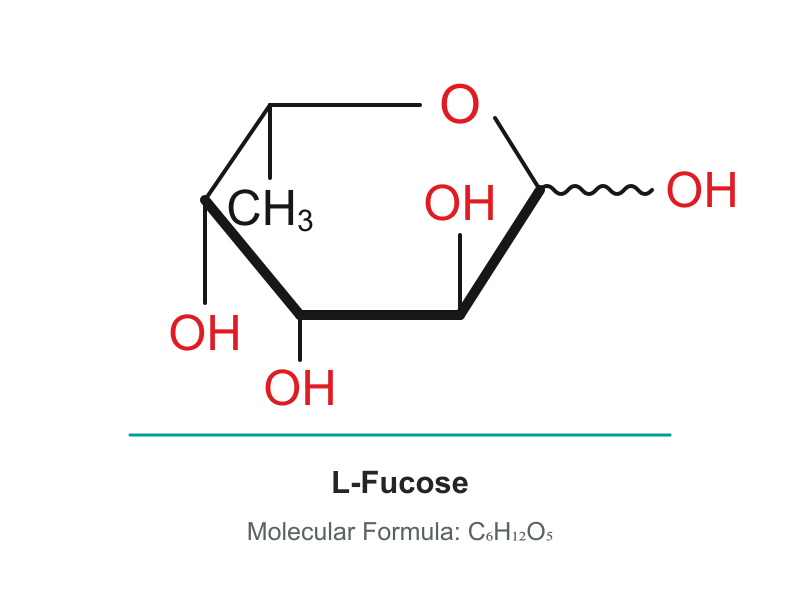
Also known as 6-deoxy-L-galactose, L-Fucose differs from many common hexose sugars because it lacks the hydroxyl group at the sixth carbon position. This structural feature contributes to its classification as a deoxy sugar.
For buyers evaluating L-Fucose powder, understanding its chemical identity, physical properties, and quality specifications is an important first step in determining whether the material meets their application requirements.
L-Fucose is relevant to several fields, including biochemical research, glycomics, and selected cosmetic ingredient formulations. However, its suitability for a specific use depends on the product's specifications, quality documentation, and application requirements.
Chemical Structure and Identification of L-Fucose
The chemical structure of L-Fucose distinguishes it from other monosaccharides and helps explain its role in biological systems.
Key identification information includes:
| Property | Description |
|---|---|
| Common name | L-Fucose |
| Chemical name | 6-Deoxy-L-galactose |
| CAS number | 2438-80-4 |
| Molecular formula | C₆H₁₂O₅ |
| Molecular weight | 164.16 g/mol |
| Compound class | Deoxyhexose monosaccharide |
The molecular formula and molecular weight provide useful reference points when checking product identity and technical documentation.
In biological systems, L-Fucose can occur as part of complex carbohydrate structures attached to proteins and lipids. These fucose-containing glycans are studied for their roles in molecular recognition, cell interactions, and other biological processes.
When purchasing L-Fucose for laboratory use or formulation development, buyers should verify the chemical identity and CAS number against the product specification and relevant analytical documentation.
Physical and Chemical Properties of L-Fucose
The physical properties of L-Fucose affect how it is handled, dissolved, stored, and incorporated into different processes.
Appearance and physical form
L-Fucose is typically described as a white or off-white crystalline powder. Its crystalline form allows it to be handled as a solid raw material and weighed for laboratory procedures or formulation preparation.
Appearance can be a useful preliminary quality check, but visual inspection alone cannot confirm chemical identity or purity. Analytical testing remains necessary to establish whether the material meets its stated specifications.
Solubility
L-Fucose is readily soluble in water and has limited solubility in certain organic solvents. Its water solubility is particularly relevant to applications involving aqueous solutions and water-based formulations.
When developing a formulation, the actual dissolution behavior may depend on factors such as concentration, temperature, mixing conditions, and the presence of other ingredients. Solubility information should therefore be treated as a starting point rather than a guarantee of compatibility with every formulation.
Thermal and storage considerations
L-Fucose is described as stable under normal temperature and dry conditions. Nevertheless, storage and handling should follow the supplier's documented recommendations.
Buyers should confirm the recommended storage conditions, packaging requirements, and stated shelf life for the specific product. These details are especially important when the material will be stored for extended periods or used across multiple production batches.
What Makes L-Fucose Different from Other Sugars?
Although L-Fucose belongs to the monosaccharide family, its structural characteristics distinguish it from sugars such as glucose and galactose.
L-Fucose is a deoxy sugar, meaning that its structure contains one fewer oxygen atom than the corresponding conventional hexose sugar. Specifically, the sixth carbon position lacks the hydroxyl group present in many other six-carbon sugars.
This difference is relevant in glycobiology because the identity and arrangement of monosaccharides influence the structures of complex glycans.
L-Fucose is frequently discussed in relation to fucosylation, the process by which fucose residues are incorporated into carbohydrate structures. Researchers investigate fucosylated glycans in areas such as cell biology, molecular recognition, and glycoprotein research.
These structural and biochemical characteristics explain why L-Fucose is used in specialized research rather than being treated simply as a conventional dietary sugar.
Applications of L-Fucose in Research and Cosmetic Formulations
The applications of L-Fucose vary according to the required grade, product specifications, and intended use.
Glycomics and biochemical research
L-Fucose is used in research involving glycans, glycoproteins, and fucosylation. Researchers may study fucose-containing carbohydrate structures to investigate their formation, molecular interactions, and biological significance.
It can also serve as a starting material or research reagent in selected biochemical workflows. The exact requirements depend on the experimental method, including purity, analytical characterization, and reproducibility.
For these applications, buyers should ensure that the material's specification is appropriate for the intended research rather than assuming that a general purity claim guarantees suitability for every experiment.
Cosmetic ingredient development
L-Fucose is also considered for selected cosmetic raw material applications, including water-based skincare formulations.
Its water solubility can be useful when incorporating the ingredient into aqueous systems. However, compatibility depends on the overall formulation, concentration, processing conditions, and stability requirements.
For product developers, evaluating the raw material involves more than reviewing its physical properties. Formulation testing and an appropriate assessment of the finished cosmetic product are still necessary.
Specialized biochemical applications
Fucose-containing molecules are relevant to research into complex carbohydrates and biological recognition processes. L-Fucose may therefore be used in selected investigations or as a starting material for further chemical or biochemical work.
The specific use should determine the required purity, documentation, and handling conditions.
How to Evaluate L-Fucose Product Specifications
Understanding the basic properties of L-Fucose helps buyers identify which specifications matter when sourcing the material.
Several factors deserve attention:
- Purity: Check the stated purity threshold and the analytical method used to determine it.
- Chemical identity: Confirm the product name, CAS number, and molecular characteristics.
- Impurity profile: Review relevant impurity limits and supporting analytical results where available.
- Physical properties: Check appearance, solubility, and any application-specific requirements.
- Documentation: Request the applicable certificate of analysis (COA) and technical data sheet (TDS).
- Application suitability: Confirm that the specification meets the requirements of the intended research or formulation.
For example, a specification stating a purity of at least 99% may be a useful initial screening criterion. However, buyers should also examine the analytical method and relevant quality attributes before qualifying the material for a specific application.
If a high-purity L-Fucose ingredient is intended for research, the requirements may differ from those for cosmetic formulation development. Evaluating the material against its actual use helps avoid unnecessary specifications while ensuring that important quality parameters are not overlooked.
Frequently Asked Questions
What is the CAS number of L-Fucose?
The CAS number of L-Fucose is 2438-80-4. Buyers can use this identifier alongside the chemical name and molecular formula when checking product specifications.
Is L-Fucose soluble in water?
Yes. L-Fucose is readily soluble in water, making it relevant to certain aqueous research procedures and water-based formulations. Actual solubility and compatibility should be evaluated under the intended conditions.
What is the difference between L-Fucose and 6-deoxy-L-galactose?
6-Deoxy-L-galactose is another name for L-Fucose. The name describes its structural relationship to galactose, specifically the absence of a hydroxyl group at the sixth carbon position.
What should buyers check when purchasing L-Fucose powder?
Buyers should verify chemical identity, purity, analytical methods, relevant impurities, batch documentation, and suitability for the intended application. Storage requirements and available technical documents should also be reviewed before use.
Understanding L-Fucose Before Selecting a Raw Material
L-Fucose is a specialized monosaccharide whose chemical structure, water solubility, and role in glycan structures make it relevant to biochemical research and selected cosmetic applications.
Understanding its identity and physical properties provides a foundation for evaluating product specifications. By reviewing purity data, analytical methods, impurity controls, and application requirements, buyers can make more informed decisions when selecting an L-Fucose raw material for research or formulation development.